

Most renovation cleanup advice assumes the house is empty. A contractor finishes a new build or a full gut renovation, hands over the keys, and a cleaning crew moves through a space nobody has lived in yet. That is not what happens in most Guelph homes. A kitchen gets redone while the family still sleeps upstairs. A bathroom gets retiled while everyone else keeps using the hallway and the linen closet three feet from the work zone. The renovation ends, but the house was never actually vacant, and that changes what post renovation cleaning in Guelph actually needs to cover.
Dust from a single room does not stay in that room. It travels through open doors, settles on furniture two rooms away, and gets pulled into the HVAC system, then blown back out through vents in bedrooms that were never touched by a single tool. If your family has been living around a renovation for weeks, the cleanup job is bigger than the room the contractors were working in. At Clenza, we get calls from Guelph homeowners who are surprised at how much dust turns up in rooms that were supposedly protected the whole time.
Why Renovation Dust Doesn’t Stay in One Room
Construction and renovation dust is made up of extremely fine particles from drywall, sawdust, sanded paint, and cut tile. Much of it is smaller than what a household vacuum or a damp cloth fully captures in one pass. Fine dust like this rides on air currents, so anywhere air moves, the dust moves with it.
Opening a door to grab something from another room does it. Walking down the hallway between the kitchen and the bathroom fifteen times a day does it. Running the furnace or air conditioner does the most damage of all, since it pulls air, and the dust suspended in that air, through the return vent and pushes it back out through every register in the house. None of that stops just because the drywall crew went home for the day.
This is the part that catches most homeowners off guard. Contractors clean their own work area reasonably well before they leave, wiping down the room where the actual construction happened. What they are not responsible for is the guest room down the hall, the linen closet, or the vent in the kids’ bedroom that has been quietly recirculating fine dust for the entire project.
How Different Types of Renovations Spread Dust Differently
Not every renovation leaves the same mess behind, and the type of work tells you where to focus the cleanup.
Kitchen renovations produce heavy dust from cabinet cutting, drywall patching, and tile work, plus grease and residue if appliances were disconnected and reconnected. Dust here tends to travel into the dining area and living room fastest, since kitchens usually have the most open sightlines to the rest of the main floor.
Bathroom renovations create a lot of tile and grout dust in a small, enclosed space, which means it settles heavily right around the work zone before spreading further. The hallway just outside the bathroom door usually needs more attention than homeowners expect.
Flooring projects, especially sanding hardwood or cutting laminate, throw fine wood dust into the air that settles on every horizontal surface in adjoining rooms, including shelves, picture frames, and the tops of doorframes.
Painting projects produce less physical debris but release fumes and fine overspray that can drift into nearby rooms, particularly if doors were left open for ventilation during the work, which is common and recommended.
A Lived In Renovation Clean Is a Different Job From a New Build Handover
Post construction cleaning for a new build or a full home renovation is usually a single, contained job. The property is empty, every surface in the home was part of the work, and the cleaning crew treats the whole space the same way, room by room, floor to ceiling. Our post construction cleaning Guelph service is built around exactly that kind of project.
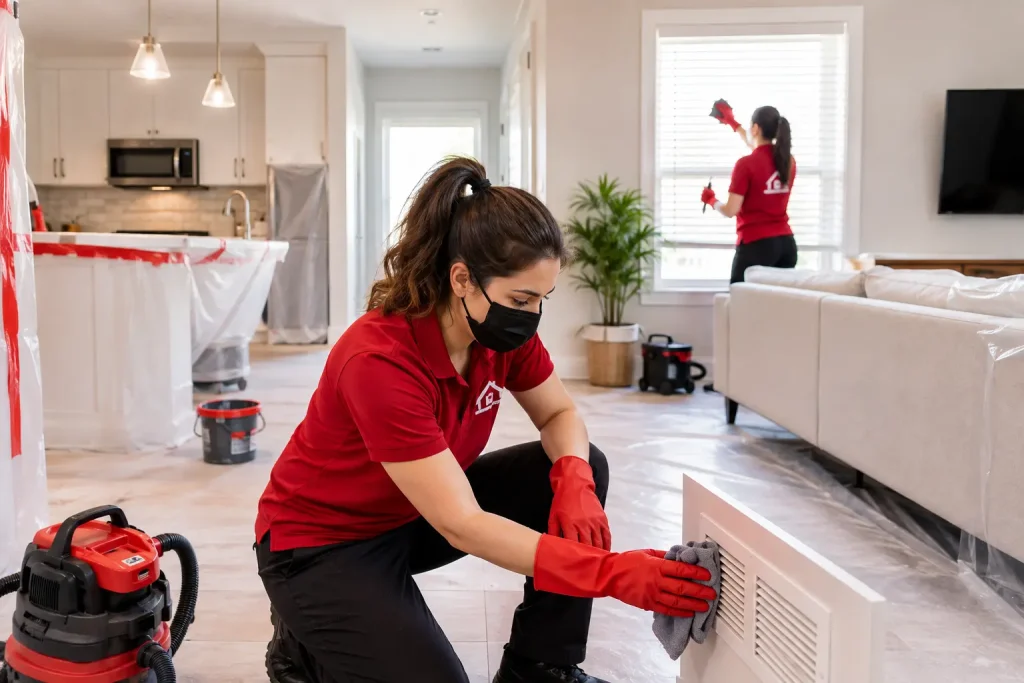
Renovation cleaning in an occupied home works differently. When people are living in the house during the renovation, the job splits into two zones. The work zone itself still needs the detailed treatment, drywall dust cleared from vents and trim, paint residue removed from glass, tile haze stripped from new flooring. But the rest of the house needs a different kind of attention: lighter dust removal spread across more rooms, extra care around furniture and fabric that was never meant to be part of a construction site, and a check of every HVAC register in the home, not just the ones nearest the renovation.
This is also why a proper post renovation cleaning pass in Guelph should never be scoped the same way as a new-build handover clean. The square footage might be similar, but the dust distribution and the amount of untouched, lived-in space involved are completely different.

What Actually Needs Cleaning After the Renovation Crew Leaves
Once the work itself is finished, a proper cleaning pass should account for the whole house, not just the room that got renovated. A few areas homeowners tend to miss:
HVAC vents, registers, and return grilles throughout the home, not only near the work zone
Hallway and stairwell floors, especially where foot traffic carried dust from the renovation to the rest of the house
Closets and drawers close to the work area, since fine dust settles inside even with the doors shut
Curtains, cushions, and other soft furnishings, which trap dust that a quick wipe down will not remove
Light fixtures and ceiling fan blades in rooms outside the renovation, where dust builds up unnoticed
Door handles, light switches, and railings, high touch surfaces that pick up dust from hands and tools
Windowsills in every room, not only the one where the work happened
Protecting the Rest of the House While Work Is Still Underway
Some of the cleanup burden can be reduced before the renovation even wraps up. Sealing the work zone with plastic sheeting or a zip wall keeps dust from spreading as freely through the rest of the home. Closing the HVAC vents in the work zone, or in unused rooms, cuts down on how much fine dust gets pulled into the duct system in the first place. A shoe off policy at the site entrance stops debris from being tracked through hallways and onto carpet in rooms that have nothing to do with the project.
None of this eliminates the need for a proper clean once the work is done. It just means less dust will have spread by the time the crew leaves, which makes the final cleanup faster and more effective.
Common Post Renovation Cleaning Mistakes in Occupied Homes
A few habits show up again and again in homes that stayed lived-in during a renovation, and each one leaves dust behind longer than it needs to.
Treating the contractor’s final wipe down as the finished clean. Contractors clear their own work area well enough to hand it back, but that is not the same as a full home reset.
Using dry cloths on fine dust. Dry dusting tends to push fine particles into the air instead of removing them, where they settle right back down a few minutes later.
Skipping the vent covers and registers. These are one of the biggest sources of dust re circulating through the house long after the renovation ends, and they are also one of the most commonly forgotten spots.
Forgetting to check or replace the HVAC filter. A filter that ran through weeks of renovation dust is often clogged or saturated, which reduces airflow and keeps recirculating trapped dust every time the system runs.
Cleaning only the rooms that look dusty. Fine construction dust is not always visible to the eye, particularly on textured surfaces, fabric, and anything above eye level.

When Post Renovation Cleaning in Guelph Needs a Professional
Wiping down a few rooms is manageable. Getting fine dust out of HVAC vents, out of tile grout, and out of every windowsill in a home that has been lived in throughout a multi-week renovation is a longer job than most schedules allow for. This is usually the point where a professional cleaning service makes more sense than trying to handle it room by room over several weekends.
For occupied homes, our team treats the renovation zone with the same detail work used on a full post construction job, cleared vents, stripped tile haze, paint residue removed, and pairs it with a lighter, wider pass through the rest of the house: dusting, vent covers, high-touch surfaces, and any room that shares airflow with the work zone. The goal is a home that feels fully clean again, not just the one room that got renovated.
Frequently Asked Questions
How long does renovation dust stay in the air after the work is finished? Fine dust can stay airborne for hours after visible work stops, and it keeps resettling on surfaces for days as it moves through the HVAC system and gets stirred up by regular movement through the house. This is why a single wipe-down right after the crew leaves often isn’t enough.
Do I need to have my air ducts cleaned after a renovation? If dust was pulled into a running HVAC system during the work, cleaning the ducts or at minimum replacing the filters is worth doing. A vent and register wipe-down throughout the house also helps, since dust that settled around the vents will keep circulating every time the system runs.
Can I just clean everything myself instead of hiring someone? Smaller renovations, like a single fixture swap, are usually manageable on your own. Larger projects that ran for several weeks with the family living in the house typically leave dust spread through more rooms than a weekend of cleaning can realistically cover.
How soon after the renovation should the house get cleaned? As soon as the crew is finished with the work zone. Dust that sits for a few extra days has more time to settle into fabric, carpet, and vents throughout the house, which makes it harder to fully remove later.
Will regular household cleaning products remove fine drywall dust? Standard sprays and cloths handle light dust fine, but fine construction dust tends to smear rather than lift with a dry cloth. Damp microfiber cloths and a vacuum with strong suction and a good filter get better results, especially on vents, blinds, and textured surfaces.
Does painting dust need the same cleanup as construction dust? Painting leaves less physical debris but more airborne fume residue and fine overspray, which settles on nearby surfaces as a light film rather than visible dust. It usually needs a wipe-down pass rather than the heavier debris removal a full renovation requires.

The Bottom Line
A renovation that happens around your daily life is not the same job as cleaning an empty new build, even when the keyword on Google looks the same. If you’re planning a project in Guelph, or the crew just packed up and the rest of the house still feels dusty, our full list of home cleaning services covers both the renovation zone and everything around it.
Health Canada recommends keeping windows open and ventilation running during renovation work to help clear dust and fumes before they settle into the rest of the home. A full cleaning pass afterward takes care of what ventilation alone cannot reach.