
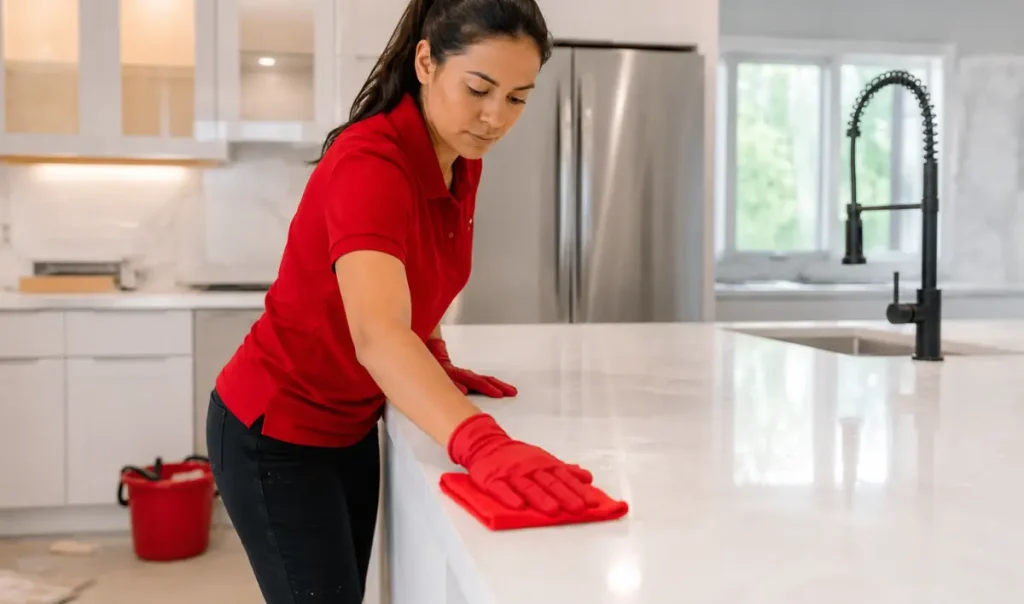
Renovations and new builds leave behind more mess than most homeowners expect. Drywall dust settles into vents. Paint splatter dries on baseboards. Sawdust works its way into corners a regular mop can’t reach. This is where construction cleaning services come in, and understanding what the process actually involves helps Guelph homeowners know what to expect, what to ask for, and why the job takes longer than a standard house clean.
Construction cleaning services are not the same as a weekly tidy-up. Contractors leave a job site clean of tools and materials, but they rarely remove the fine dust and residue that settles over every surface during a build. That layer of dust contains drywall particles, wood fibre, and sometimes trace VOCs from paint, adhesives, and sealants. Left alone, it recirculates through the HVAC system every time the furnace or air conditioner kicks on, which is why professional construction cleaning is treated as its own category of service rather than an add-on to regular housekeeping.
Why Construction Sites Need a Different Cleaning Approach
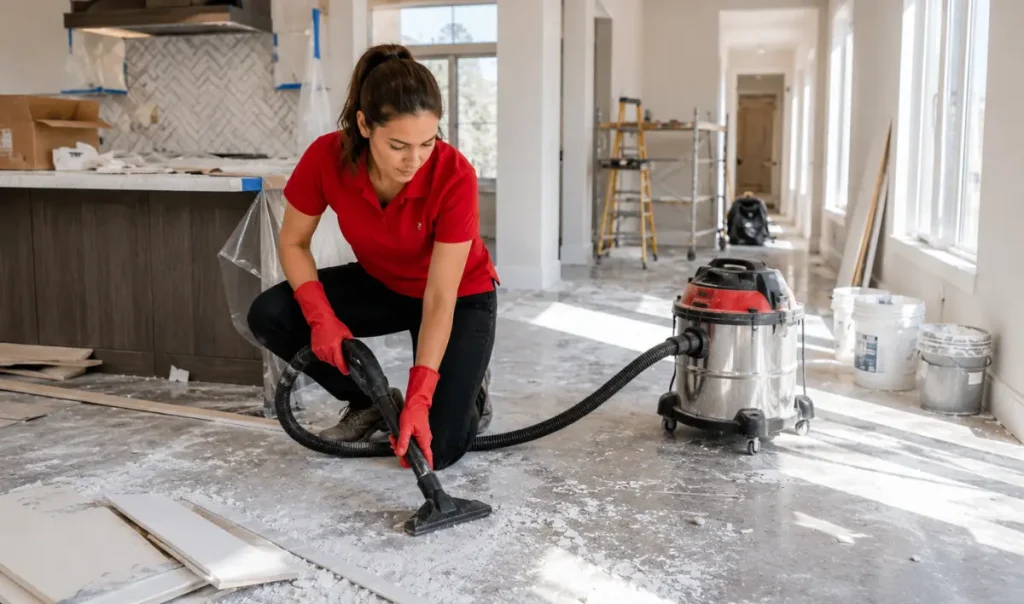
A home coming out of renovation carries a specific mix of debris that standard cleaning tools were not built to handle. Drywall dust is fine enough to pass through basic filters, so it settles on window sills, light fixtures, and inside cabinets that were closed during the work. Grout haze from tile installation hardens on flooring within days if it is not addressed quickly. Adhesive residue from flooring or trim work often needs a solvent-safe approach rather than plain water, since the wrong product can smear it further into the surface.
Construction cleaning services address this by using a layered method instead of a single pass. Crews start from the ceiling down, since dust settles downward, and finish with floors last so nothing falls back onto a cleaned surface. This sequencing matters more than most homeowners realize; a DIY attempt that starts with floors often has to be redone once dust from higher surfaces settles back down hours later.
The Three Stages of a Professional Construction Clean
Most reputable construction cleaning services follow a three-stage process, though the exact terminology varies by company.

Rough clean happens while the site is still active or just after major work wraps up. This stage removes bulk debris, packaging, protective plastic sheeting, and loose construction materials. It is not a detail clean; the goal is to make the space safe to move through and to clear the way for finishing trades like painters or flooring installers.
Final clean, sometimes called a first-fix clean, is the detailed pass most people picture when they think of construction cleaning. This covers wiping down every surface, cleaning inside cabinets and drawers, washing windows inside and out, vacuuming and mopping floors, removing sticker residue and manufacturer labels from new appliances and fixtures, and cleaning light fixtures and switch plates. Vents and returns typically get wiped down at this stage as well, since dust accumulates heavily around them.
Touch-up clean, also called a punch clean, happens a few days after the final clean once any settled dust has had time to resurface. This is a shorter visit focused on spot-cleaning anything that reappeared, plus a final polish before the space is considered move-in ready. Skipping this stage is one of the most common reasons homeowners feel their construction cleaning “didn’t hold up,” when in reality the settling dust simply needed a second pass.
What’s Actually Cleaned During the Process
A thorough construction cleaning service typically covers baseboards and trim, window tracks and sills, cabinet interiors and exteriors, countertops, all flooring types, light fixtures and ceiling fans, switch plates and outlet covers, door frames and handles, and appliance exteriors and interiors on new units. Bathrooms and kitchens usually get closer attention since grout, caulking, and fixture residue require more targeted products than the rest of the home.
Air quality is part of the job too, even if it is less visible. Wiping down vent covers and using HEPA-filtered vacuums where possible helps reduce the amount of dust that continues circulating after the crew leaves. This matters for households with allergies, young children, or anyone with respiratory sensitivities, since fine construction dust can linger in a home’s air system for weeks after a renovation if it isn’t properly addressed.
How Long Does It Take
Timeline depends heavily on square footage and the scope of the renovation, but a full construction clean for an average Guelph home typically takes a full day for the final clean stage alone, with the touch-up visit scheduled separately a few days later. Larger renovations, additions, or new builds can extend this significantly. Homeowners planning a move-in date should build the cleaning timeline into their overall schedule rather than treating it as a same-day task squeezed in after contractors leave.
Signs a Space Needs Professional Construction Cleaning
Not every post-renovation situation calls for the full three-stage process. A small bathroom refresh with minimal dust may only need a standard deep clean. Larger projects are a different story. Full kitchen renovations, whole-home flooring replacement, additions, and new builds almost always benefit from a dedicated construction cleaning service because the volume of fine dust and the number of surfaces affected go well beyond what regular cleaning tools and products are designed to handle.
Homeowners who try to tackle this themselves often underestimate two things: how much time it takes to properly clean inside every cabinet and drawer that was open during construction, and how much dust resettles after the first pass. For homes coming out of a full renovation or new build, our Post Construction Cleaning service covers the full three-stage process described above, handled by a crew that already knows what to check for.
What This Means for Guelph Homeowners
Guelph’s mix of established neighbourhoods with older homes and newer subdivisions with recent builds means construction cleaning needs vary a lot from one property to the next. Older homes undergoing renovation often have more layers of existing dust and debris disturbed during the work, while new builds tend to have less legacy dust but more construction-specific residue like drywall compound and paint overspray. A cleaning approach that works for a century home kitchen remodel is not necessarily the right fit for a newly built subdivision property, which is part of why a walkthrough before the job starts matters more than a flat, one-size-fits-all quote.
If your renovation is wrapping up and you are trying to figure out which type of visit fits your situation, our full list of cleaning services in Guelph breaks down every option so you can compare before booking.
Frequently Asked Questions
What is included in a construction cleaning service?
A full construction cleaning service covers dusting and wiping every surface, cleaning inside cabinets and drawers, washing windows and tracks, vacuuming and mopping all flooring, removing labels and sticker residue, and cleaning light fixtures, vents, and switch plates. Some companies separate this into a final clean followed by a touch-up visit a few days later.
How long does construction dust stay in a house?
Fine construction dust can continue settling and recirculating through an HVAC system for several weeks after a renovation if it isn’t professionally addressed, since it is fine enough to pass through standard filters and resettle on surfaces after an initial cleaning pass.
Do I need construction cleaning after a small renovation?
Smaller projects with limited dust, like a single-room paint job, may only need a standard deep clean. Larger projects involving drywall work, flooring installation, or multiple rooms typically produce enough fine dust and debris to warrant a dedicated construction cleaning service.
Can regular cleaners handle post-construction cleanup?
Standard cleaning services are not always equipped for the volume and type of debris left behind by renovation work, including drywall dust, adhesive residue, and grout haze. Construction cleaning uses a different sequence, different tools, and often different products to handle this safely and effectively without spreading residue further into finished surfaces.
How soon after construction should cleaning happen?
Booking the final clean as soon as major work wraps up, with a touch-up scheduled a few days later, gives the best result. Waiting too long allows dust to settle further into surfaces and increases the chance of debris being tracked through the home.
What to Ask Before Hiring a Construction Cleaning Company
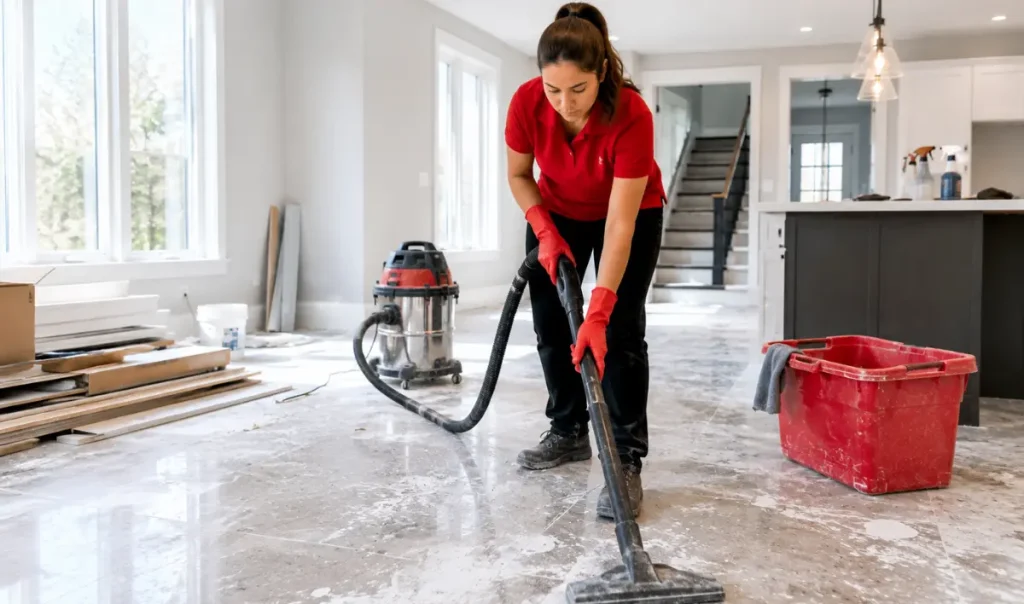
Not every company that advertises construction cleaning services runs the same process. Before booking, it’s worth asking a few direct questions. Does the quote include a touch-up visit, or only the final clean? Some companies bundle both stages into one price, while others treat the touch-up as a separate add-on, which changes the total cost significantly. What equipment do they use for dust removal, and do they use HEPA-filtered vacuums, especially important for households with allergies or young children. How do they handle cabinet interiors, since some crews only wipe exterior surfaces unless specifically asked to open every drawer and shelf. And what happens if dust resettles after the crew leaves, since a company confident in its process should be willing to address this without treating it as a separate paid visit.
Getting clear answers to these questions upfront avoids the common frustration of paying for a construction clean that looks finished on the day but shows dust again within 48 hours. A reputable local company should be able to walk through their process stage by stage without hesitation, and should be willing to do an in-person walkthrough before quoting rather than pricing based on square footage alone. Renovation projects vary too much in scope and mess level for a flat per-square-foot rate to reflect the actual work involved.
Preparing Your Home Before the Crew Arrives
A few steps on the homeowner’s end can make the construction cleaning process faster and more thorough. Clearing any remaining tools, materials, or packaging left by contractors gives the cleaning crew a clear path to work through the space efficiently. Confirming that all trades have finished, including painters and flooring installers, prevents a situation where the crew cleans around unfinished work and has to return later. Flagging any fragile fixtures, new appliances, or delicate surfaces ahead of time also helps the crew use the right products, since something like natural stone countertops or matte-finish cabinetry can require different cleaning approaches than standard laminate or gloss surfaces.
It’s also worth confirming HVAC status before the clean begins. If the furnace or air conditioner ran during construction, more dust has likely circulated through the ductwork than in a home where the system stayed off. This affects how much attention vents and returns need during the final clean, and in some cases may point to a separate duct cleaning service being worth considering alongside the construction clean itself.
Common Mistakes Homeowners Make With Construction Cleanup
A few patterns show up repeatedly when homeowners try to manage construction cleanup without a dedicated service or plan. The first is starting the clean too early, before all trades have finished. Painters and flooring installers often generate their own dust and debris, so a clean scheduled before their work wraps up ends up needing to be repeated once everything is actually done.
The second common mistake is treating the final clean as a one-time visit rather than budgeting for a touch-up. As covered earlier, settled dust resurfaces within a day or two of the first pass, and skipping that second visit is the single biggest reason homeowners feel disappointed with cleaning they paid for. The third is using standard household cleaning products on construction residue. Grout haze, adhesive overspray, and paint splatter often need targeted products rather than an all-purpose spray, and using the wrong product can smear residue further into a surface or damage a finish that was just installed.
Finally, many homeowners underestimate how much time cabinet interiors add to the job. Every drawer and shelf that was open or accessible during construction likely collected fine dust, and properly wiping out an entire kitchen’s worth of cabinetry can take as long as the rest of the visible surface cleaning combined. Budgeting realistic time, whether doing it yourself or scheduling a professional visit, avoids the frustration of a job that runs longer than expected on move-in day.

Why This Matters Beyond Appearance
A clean surface is not just about looks. Trapped construction dust affects indoor air quality, can aggravate allergies and respiratory conditions, and in some cases leaves behind fine particulate matter that health authorities flag as a concern in enclosed spaces. Health Canada’s guidance on improving indoor air quality during renovations outlines how construction dust and ventilation choices affect air quality long after visible dust has been wiped away, which is part of why a proper construction clean is worth treating as its own service rather than folding it into a general house cleaning.
For homeowners in Guelph planning a renovation wrap-up, Clenza Home Cleaning can walk through what a construction cleaning visit for your home would include.