

Every cleaning company in Guelph says the same thing on their homepage, eco friendly, pet friendly, safe for the family. It shows up so often that the phrase has started to mean almost nothing, which is a shame, because the underlying question is a genuinely important one for anyone with kids, pets, allergies, or simply a nose that reacts to a heavily scented living room. What does eco friendly actually mean when a company uses it, what should you actually be asking before you let someone clean your home, and does any of it change the result you get on your counters and floors. If you have not already, our guide on getting a home ready before a cleaner arrives covers the practical side of a visit, while this one focuses specifically on what goes into the bottle.
Start with the label itself, because this is where most of the confusion begins. In Canada, household cleaning products are not required by law to list every ingredient on the packaging, which means a bottle marked green or natural can still contain fragrance chemicals, preservatives, or surfactants that were never disclosed anywhere on the label. That is not a Clenza specific issue or a Guelph specific issue, it is a gap in how consumer cleaning products are regulated across the country. Ingredients used in Canadian household cleaners fall under the Canadian Environmental Protection Act, and Health Canada does review categories of these chemicals for risk, but the review happens at the regulatory level, not on every individual bottle sitting on a store shelf. Practically speaking, that means the word eco friendly on packaging is closer to a marketing choice than a certified standard, and a homeowner asking a cleaning company what is actually in the products being used in their home is asking a completely reasonable question, not being difficult.
So what should genuinely eco friendly and pet friendly cleaning look like in practice, beyond the label. It generally means products without harsh bleach fumes or ammonia in areas where pets sleep or where children play on the floor, fragrance that is minimal or unscented rather than the heavy synthetic smell used to signal freshness, and surfaces that are safe to touch again within minutes rather than needing to air out for hours. It also means a team that knows which products are appropriate for which surface, since the wrong product on natural stone, hardwood, or certain countertop materials can cause damage that has nothing to do with how eco friendly the bottle claims to be. A cleaner who can explain why they use a particular product on your kitchen counter versus your bathroom tile is showing real product knowledge, not just repeating a slogan.
This matters more for some households than others, and it is worth being honest about that rather than treating every home the same. A household with a crawling baby, a dog that spends half the day lying on the kitchen floor, or a family member with asthma or chemical sensitivities has a much lower tolerance for harsh residue than a household without any of those factors. If any of that applies to your home, it is worth saying so directly when you book, not assuming the cleaning company will guess. Most professional cleaners, Clenza included, are used to adjusting products based on what a household actually needs rather than running the exact same routine in every home regardless of who lives there.
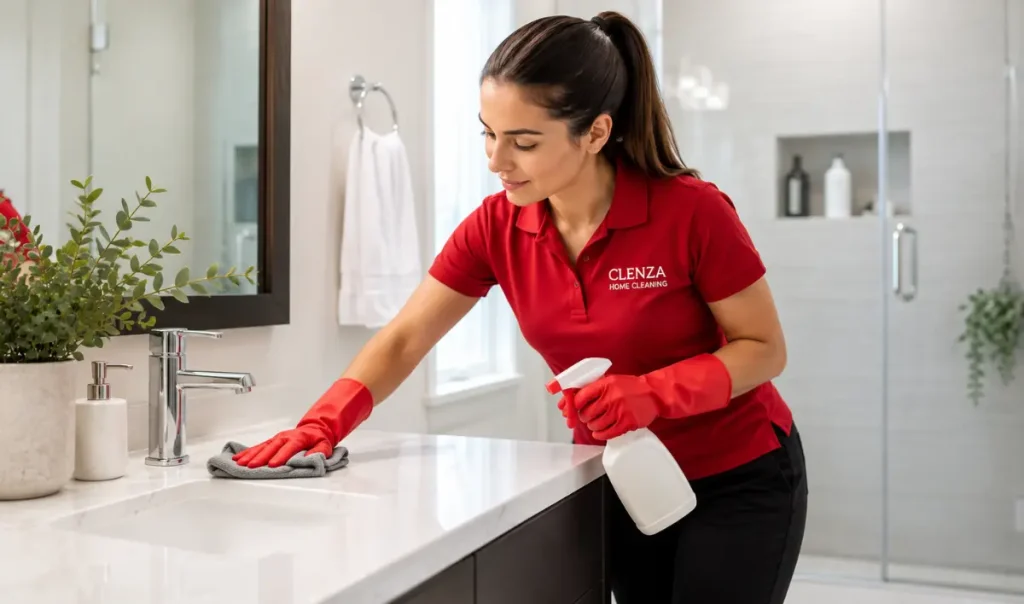
There is also a genuine safety angle here that goes beyond comfort. Health Canada’s guidance on using household chemicals safely points out that mixing certain products, bleach and ammonia based cleaners being the most common example, can produce dangerous fumes, and that many cleaning products carry hazard symbols precisely because they are not meant to be handled casually. A professional team that has been trained on which products can and cannot be combined, and that stores and transports them correctly between jobs, is providing a real layer of safety that a rushed DIY clean using whatever is under the sink does not always guarantee. This is one of the quieter reasons background checked, trained cleaners tend to be worth the cost, the training extends to product handling, not just the physical cleaning itself.
Cost is a fair question to raise here too, since some homeowners assume eco friendly automatically means a higher price. In most cases it does not change the price of a standard visit, since professional grade eco friendly products are priced similarly to conventional ones when bought at the volume a cleaning company uses. Where cost can shift is if you request a very specific brand or a fragrance free line that the company does not normally stock, in which case it is worth asking ahead of time rather than assuming. A short conversation before booking, the same conversation that determines your overall price for regular home cleaning or a deeper visit, is usually enough to sort this out without any surprises later.
Pets bring their own set of considerations into this that are easy to overlook. Cats in particular are far more sensitive to certain essential oils and fragrance compounds than most people realize, and a product that is perfectly safe for a household with no animals can still cause a reaction in a cat that walks across a freshly cleaned counter and then grooms itself. Dogs tend to be less sensitive but will still investigate anything new with their nose first, which is part of why unscented or lightly scented products tend to be the safer default in homes with animals rather than the exception. If you have a pet with a known sensitivity, mentioning the specific animal and the specific concern when you book gives the cleaning team something concrete to work from, rather than a general request that gets interpreted differently by every visit.
Allergies deserve their own mention as well, since they show up differently than a pet reaction and are often harder to trace back to a cleaning visit. A family member who develops a headache or starts sneezing a few hours after a clean is not imagining it, and heavily fragranced products are one of the more common triggers, particularly in a smaller or less ventilated home where scent lingers rather than dissipating quickly. Opening a window during and after a visit helps regardless of which products are used, but choosing a lower fragrance option in the first place reduces the problem at the source rather than just managing it afterward.
None of this means every eco friendly claim is empty marketing, and it would be unfair to suggest that. It means the term alone is not enough information to act on, and the more useful question is not whether a company says eco friendly, but whether they can tell you specifically what that means in their case, which products they actually use, and why. A more thorough deep clean visit that uses the wrong product on the wrong surface can cause more harm than good regardless of how green the label looks, while a company using straightforward, lower toxicity products correctly and consistently is doing the job right even without a long list of certifications attached to it. A recurring regular cleaning schedule gives a household the chance to notice over several visits whether a particular product routine actually agrees with the people and animals living there, which is a more reliable test than anything printed on a bottle.
If you are choosing a cleaning company in Guelph and this matters to you, ask directly rather than relying on the word eco friendly doing the work for you. Ask what products are used on hard surfaces versus soft ones, ask whether the team can skip a specific ingredient if someone in the home reacts to it, and ask how quickly a room is safe to use again after a visit. A company that answers these questions clearly and specifically, the same way Clenza walks new clients through it before the first booking, is telling you more about how seriously they take your home than any word on their homepage ever could.
Guelph households living in older character homes around neighbourhoods like the Old University District often deal with original hardwood, plaster walls, and vintage fixtures that need gentler, correctly chosen products in the first place, while newer builds in areas like Kortright Hills tend to have engineered surfaces and high gloss finishes that show streaking from the wrong product almost immediately. In both cases, the product choice is not just about eco friendly branding, it is about protecting the specific home you actually live in.
Green certifications come up often enough in this conversation that they deserve a straight answer too. Labels like Ecologo or Green Seal do exist and do involve third party testing, so a product carrying one of those marks has actually been evaluated against a defined standard rather than just choosing the word green for itself. That said, plenty of genuinely low toxicity, fragrance light products on the market are not certified simply because certification is expensive and time consuming for a manufacturer to pursue, not because the product itself is worse. A missing certification is not proof of anything either way, which is another reason asking a cleaning company directly what they use, rather than searching for a logo on the bottle, tends to give a more accurate picture than the packaging alone.
Bleach is probably the single most polarizing product in this entire conversation, so it is worth addressing directly rather than dancing around it. Bleach is genuinely effective against certain bacteria, mould, and viruses, and there are situations, a bathroom with active mildew in the grout being a common one, where it is still the most practical tool for the job. The concern is rarely bleach itself in a well ventilated space used correctly. The real risk comes from mixing it with ammonia based products, which produces toxic fumes, or using it in a small, poorly ventilated bathroom with the door closed and the fan off. A cleaning team that understands this uses bleach sparingly, only where needed, with the room properly ventilated, rather than avoiding it entirely or using it as a default for every surface in the home. If you would prefer bleach not be used in your home at all, for a pet, an allergy, or simply personal preference, saying so ahead of time is a normal request and one most companies can accommodate with an alternative disinfectant.
Condos and apartments in Guelph add a slightly different dimension to product choice that houses do not usually deal with. Shared ventilation systems mean a strong fragrance or a heavy chemical smell can travel further than it would in a detached home, sometimes reaching a neighbouring unit through shared air handling, which is one more reason lower fragrance products tend to be the better default in multi unit buildings specifically. Smaller square footage also means products linger in a more concentrated space for longer after a visit, so a quick period of ventilation, even just cracking a window for twenty minutes after cleaning, makes a bigger difference in a compact condo than it would in a larger detached house with more air volume to dilute residual scent.
There is also a DIY comparison worth making here, since plenty of homeowners default to whatever multipurpose spray is already under the sink rather than thinking about product choice at all. That is a reasonable habit for daily tidying, but it becomes a real gap during a deeper clean, where the wrong product on the wrong surface, an acidic cleaner on natural stone or an abrasive powder on a glossy countertop, can cause damage that costs far more to fix than the cleaning itself would have cost. Professional cleaners carry a working knowledge of which product belongs on which surface precisely because they see a wide range of homes and materials every week, which is a form of expertise that goes well beyond simply choosing a bottle labelled eco friendly at the store and hoping it works everywhere.
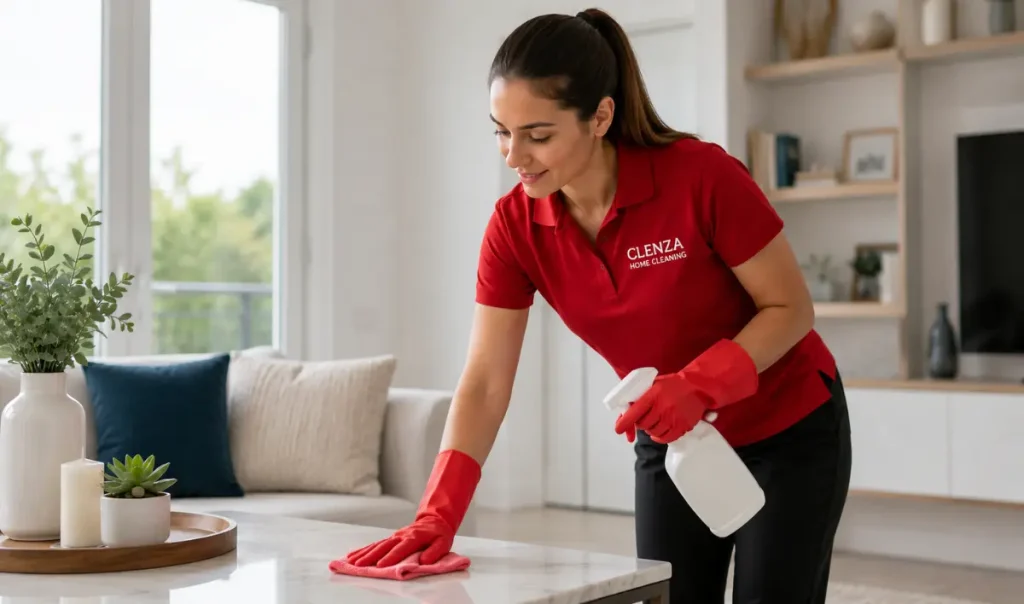
If you are booking a cleaning service in Guelph and want to know exactly what will be used in your home before anyone arrives, reach out to the Clenza booking team and ask. A short conversation before your first visit is a normal part of booking, not an inconvenience, and it is the fastest way to get a real answer instead of a slogan.